Wednesday, September 18, 2013

Wednesday with Words: The power of a poet

We all know what it means to be spartan – stern, austere, brave, frugal – but Sparta, the home of Menelaus and Helen, was not always “spartan.”  During the Dark Age and the early Archaic Age of Greece she was not so different from other Greek cities like Athens.  Sparta’s merchants traveled to other cities to trade, her poets wrote lyric verse, her craftsmen and artisans flourished.

In the eighth and seventh centuries B.C. the Spartans fought two wars with neighboring Messenia. During the First Messenia War, Lycurgus gave his famous laws to Sparta, but scholars see the warrior-poet Tyrtaeus, who lived during the Second Messenian War, as the man who first envisioned the true Spartan – the people they became and whom we think of as Classical Spartans.


“Spartan Soldier”
~Tyrtaeus of Sparta (c. 620 B.C.)

It is beautiful when a brave man of the front ranks,
falls and dies, battling for his homeland,
and ghastly when a man flees planted fields and city
and wanders begging with his dear mother,
aging father, little children and true wife.
He will be scorned in every new village,
reduced to want and loathsome poverty; and shame
will brand his family line, his noble
figure. Derision and disaster will hound him.
A turncoat gets no respect or pity;
so let us battle for our country and freely give
our lives to save our darling children.

Young men, fight shield to shield and never succumb
to panic or miserable flight,
but steel the heart in your chests with magnificence
and courage. Forget your own life
when you grapple with the enemy. Never run
and let an old soldier collapse
whose legs have lost their power. It is shocking when
an old man lies on the front line
before a youth: an old warrior whose head is white
and beard gray, exhaling his strong soul
into the dust, clutching his bloody genitals
into his hands: an abominable vision,
foul to see: his flesh naked. But in a young man
all is beautiful when he still
possesses the shining flower of lovely youth.
Alive he is adored by men,
desired by women, and finest to look upon
when he falls dead in the forward clash.

Let each man spread his legs, rooting them in the ground,
bite his teeth into his lips, and hold.


Wednesday, September 11, 2013

Wednesday with Words: "House and wife and an ox for the plough"

This semester I’m taking a seven week-long class from Coursera on The Ancient Greeks. Check out the syllabus – it’s brutal.

This quote is from one of my assigned readings this week, a selection from Aristotle’s Politics, on the polis.  I’ve deleted a longish section because I wanted to focus on Aristotle’s description of the oikos, the household or family.

He who thus considers things in their first growth and origin, whether a state or anything else, will obtain the clearest view of them. In the first place there must be a union of those who cannot exist without each other; namely, of male and female, that the race may continue (and this is a union which is formed, not of deliberate purpose, but because, in common with other animals and with plants, mankind have a natural desire to leave behind them an image of themselves), and of natural ruler and subject, that both may be preserved…. 
Out of these two relationships between man and woman, master and slave, the first thing to arise is the family, and Hesiod is right when he says, 
        ‘First house and wife and an ox for the plough,’ 
for the ox is the poor man’s slave. The family is the association established by nature for the supply of men’s everyday wants, and the members of it are called by Charondas ‘companions of the cupboard,’ and by Epimenides the Cretan, ‘companions of the manger.’


Friday, September 6, 2013

Different children learn to read at different ages, and that's okay

Of my seven children, one will probably never be able to read.  One was a fairly typical student in the beginning.  We used Teach Your Child to Read in 100 Easy Lessons, beginning whe she was six.  Then she progressed through easy readers and chapter books until she was about ten years old when she suddenly started reading way beyond her grade level (and by that I mean, she started reading The Lord of the Rings).  Another one learned to read about the same way I did – she had a few lessons in phonics when she was five or six, figured out the rest for herself right away, and began reading classic children’s literature on her own around age eight.  When she was thirteen I handed her a stack of books from Ambleside Online’s Year 7 book list and she managed them fine. 

The other four have all been “late” readers.  

Home Grown Kids, by Raymond and Dorothy Moore, was the first book I ever read on homeschooling.  I never believed that all children should develop physically or intellectually on the same schedule, but having read the Moores’ book, I was steadfast when a loving family member began to worry that my second child wasn’t reading yet shortly after his ninth birthday.

“Read, sing and play with your children from birth.  Read to them several times a day, and they will learn to read in their own time – as early as 3 or 4, but usually later, and some as late as 14. [p. 225]”

They’d said that children under eight or nine years old quite often reverse letters like b and d, and words like saw and was, so I wasn’t caught off-guard when my son also did that.  He had beautiful handwriting but he often wrote a beautiful mirror-image of what he intended.

I began his reading lessons when he was almost seven, using 100 Easy Lessons, supplemented with phonogram cards from Bonnie Dettmer’s Phonics for Reading and Spelling, which is based on Romalda Spalding’s method.  We’d have a brief lesson each day, always keeping it under fifteen minutes and cutting it shorter than that if he was struggling.  I wanted to end each lesson with success, not frustration.  When he quit making progress, we’d take a break for a week or a month to give his brain time to catch up. 

The most important thing to me was that he not learn to hate reading, or get the idea that he was stupid.

After a while I switched to McGuffey’s First Reader because the stories were more interesting and I could tell he didn’t like the silliness of 100 Easy Lessons.  That’s not meant to be a criticism of 100 Easy Lessons.  Lots of kids love it and do well in it.  I’m just pointing out that although it’s obviously a bad idea to hop haphazardly from one curriculum to another, there’s nothing wrong with making a judicious change when you think it will be better for your child. 

Then one day, when he was nine and a half, he picked up Brian Jacques’ Redwall and read the whole thing in a few days.  Just like that, it all clicked, and he never needed easy readers.

This spring my then-twelve year old son had a similar experience.  We’d spent years going through 100 Easy Lessons, memorizing phonogram cards, reading through all the BOB books, working slowly, slowly through McGuffey’s Primer and First Reader, taking breaks as needed.  He was also slowly reading through Josephine Pollard’s Life of George Washington, covering just one or two paragraphs a week. 

Then one day, because his older sister was taking too long getting to the next chapter of the Harry Potter book she was reading to him and the ten-year-old, he just read the rest of the book himself.  And it’s been hard to get him to do anything besides devour books since then.  Over the last few months he’s read the rest of Harry Potter, all of the Artemis Fowl and Percy Jackson books, several Sugar Creek Gang and Landmark books, and The X-Craft Raid by Thomas Gallagher, which retells the story of the men involved in a particular battle during World War II.

My ten-year-old is still memorizing phongram cards with me and struggling through the BOB books.  She won’t let me forget her reading lesson though – she loves it and she’s eager to learn, it’s just slow, hard work for her.  She’s had a lot of trouble keeping the six spellings of /er/ straight.  Phonics for Reading and Spelling suggests this mnemonic:  “Her first church worships, and learns courage.”  She can remember that easily enough and she knows the first four, but she’s been having a hard time with the last two – ear, the /er/ of “learns” and our, the /er/ of “courage.” 

This week I hit on something that seems to be working.

We’re also using the cursive handwriting program from Logic of English, and looking at these two troublesome phonograms it occurred to me that c and o both belong to the curve family of letters, while l and e both belong to the loop family.

I wrote it out for her on the lined white board we use for lessons:


She wrote the two words out herself that day and the next day she remembered it – a huge victory!

I had another child who also needed to learn kinesthetically.  I’ll never forget how hard she worked on a – /ă/ /ā/ /ä/ – but never getting anywhere until I told her to march around the room, saying the sounds in rhythm.  That did the job for her.  After that, anytime she needed to learn something that wasn’t coming easily, she’d march and say it to the beat of her feet.

My point is that every child is different, and you shouldn’t worry if yours isn’t meeting typical grade- or age-level expectations.  Just work slowly and cheerfully at it, figuring out what your child needs in order to master the skill for himself.  Keep the lesson short – end it on a success, not a failure.  If either of you is getting frustrated, take a break for a while.  And by “a while” I mean anything from a few minutes to a few months, just depending on what the situation calls for.


Wednesday, September 4, 2013

Wednesday with Words: Implacable resentment

Odysseus answered: 
“May it please your grace, my lord King Agamemnon, the man will not quench his anger; he is even more full of passion and rejects you and your gifts….” 
All heard this aghast, in dead silence; it was a heavy blow.  They were long silent, but Diomedês broke the silence, as usual: 
“May it please your Grace, my lord King Agamemnon!  It was a great pity to ask [Achillês] at all or to offer your heaps of treasure.  He is always a proud man, and now you have made him prouder than ever.
 [The Illiad, Book IX, Homer, tr. W.H.D. Rouse]


‘No’ – said Darcy, ‘I have made no such pretension.  I have faults enough, but they are not, I hope, of understanding.  My temper I dare not vouch for. – It is, I believe, too little yielding – certainly too little for the convenience of the world.  I cannot forget the follies and vices of others so soon as I ought, nor their offences against myself.  My feelings are not puffed about with every attempt to move them.  My temper would perhaps be called resentful.  My good opinion, once lost, is lost forever.’ 
‘That is a failing indeed!’ cried Elizabeth.
 [Pride and Prejudice, chapter XI, Jane Austen]


Tuesday, September 3, 2013

I DIDN'T MEAN TO POST THAT!

That's me yelling at Feedly.  Just now I accidentally hit the publish button on a post I meant to save.  It isn't ready yet.  It's incomplete.  It's probably also incoherent.  I immediately took it off my blog, but it was sent to Feedly before I could delete it and Feedly doesn't update things like that the way Google Reader did.

*sigh*

So, please ignore the last post.

Monday, September 2, 2013

Can't get enough of this song

It's from Master's Sun, the drama about the girl who sees ghosts, which I mentioned the other day.


[Translation by pop!gasa]

When you pass by my finger tips
Warmth spreads throughout my cold heart

I want to softly go to you and lean on you
But the distance between us is not narrowing

It’s okay even if I can’t touch you
It’s okay even if I can’t hug you
Lonely love
Yes I love you, like my destiny
I can feel you

Lalala lala lala
Lalala lala lala
Lalala lala lala lala
My heart can reach you

I want to reach out my hands and hold you
But it feels like we’ll get farther apart so I just linger around you

It’s okay even if I can’t love you
It’s okay even if I can’t reach you
Lonely love
Yes I love you, even from far away
I can see you

It’s okay even if I can’t touch you
It’s okay even if I can’t hug you
Lonely love
Yes I love you, like my destiny
I can feel you

Lalala lala lala
Lalala lala lala
Lalala lala lala lala
My heart can reach you

Lonely love

Friday, August 30, 2013

Confessions of a K-drama addict

I really have the Deputy Headmistress to blame thank for introducing me to Korean drama.  She started blogging about it last year and after a while I started reading her posts, and then her description of one show, Stars Falling from the Sky, caught my attention (it was her mention of a family with five super-cute adopted children in the family) and I decided to watch it.

Eldest Daughter caught me watching it and scolded me horribly, because she'd tried before to get me to watch some K-drama with her and I wasn't interested.  I don't even remember her asking me about it.  After the conversation, I vaguely remembered knowing that she'd watched some Korean shows (along with Japanese ones), and I knew she liked Korean pop music (along with Japanese), but honestly.  I'm sure my take on it at the time was, "That's nice, dear."  My only excuse is that a positive review by one of my peers carried more influence than a positive review by my own offspring.  I have since learned that my daughter was raised well enough that I can trust her taste, not only in books, but also in entertainment.  Go figure.

I've watched a little over two dozen of them, which is an embarrassing thing to say, because these shows tend to run sixteen to twenty one-hour episodes (and I've watched some of them more than once).  But last winter I was sick in bed for several days and watched several hours during that time.  Also I've been devouring K-drama instead of books.  But in my defense I'll say that their stories are so well-told and complex that you're not going to have your brains melt by watching them, unlike with most American television shows.  Really.  The plots are positively Dickensian.

So, what do I love about K-drama?

First, how important family is.  This was the reason I watched the first drama.  In that show, the parents die in a car accident and the oldest daughter, who is twenty-five and amazingly irresponsible, has to grow up fast so she can take care of her five adopted siblings.  On one occasion the oldest boy scolds her for her bad behavior and she listens to him and promises to do better, and she really does.  That may sound disrespectful of an older relative, but he is the oldest boy after all, which carries a lot of responsibility, so even though he's only twelve years old, he's the man of the family.

Second, how shy they are about physical contact between the sexes.  This makes the love stories very sweet, for the most part, and so much more romantic than shows that convey the couple's feeling for each other by, well, physical contact.  I'll just point out here that even though these shows are very clean by American standards, I don't let my younger children watch many of them, because romance is such a big part of the stories and I don't want them feeding very much on that fare.

Then there's the music.  Faith, aka The Great Doctor has gorgeous music, some of it classical-style soundtrack stuff like you'd expect, but also a lot of music by pop stars, which I didn't expect in a drama set in the 1300s.  The first time this particular bit was played during the first episode, Number One Son came out of his room to listen and was hooked on the drama ever after.


I'm testing a hypothesis of mine -- if I love the music, I'm going to love the show.  If the music is bad, or forgettable, the show will be too.

I also love listening to the language.  Korean is structured so very differently than English, and that difference fascinates me.  Where we would say, "I'm sorry for being rude," or "Thank you for giving me a ride," in Korean it's something like "For being rude, I'm sorry," or "For giving me a ride, I thank you."  That's not a literal translation because I don't speak Korean -- it's just what I've noticed from picking up a few words here and there.  I love listening for the ways people address each other, the honorifics and endearments, the way old people are all called grandfather or grandmother, even by strangers.  I love the fact that they have informal or comfortable speech for family and close friends and formal speech for everyone else.  I love listening for when two characters transition from formal to informal words because of what it means in their relationship.  It kills me that I don't know Korean.  In some of these shows I love the characters so much and want to know their language so I can know them better.

This is closely related to loving the language difference -- I love seeing the world through a different culture's eyes, seeing what they value and how they go about solving their problems.

A big attraction for me is how they create their characters and tell their stories.  For example, in American movies and TV shows, generally the characters are non-religious and they live in a world where religion doesn't exist, unless it's necessary to the plot.  But in Korean dramas, characters are Christian or Buddhist or non-religious in the same way that people are in real life -- it's a part of their being and doesn't necessarily have anything to do with the plot.  It's just the way people are.  Characters are generally well-rounded with strengths and weaknesses that tend to go hand-in-hand in real life.  There are exceptions to this, of course, notably the cartoon villain who is evil just because he loves being evil.  There are also stock characters who aren't realistic at all -- the evil girl who does everything in her power to break up the main couple just because... well, the plot needs some conflict, right?  Preferably several layers of conflict.  The evil mom or mother-in-law is another common one.  But the main characters are usually believable individuals.

There's more, but I'll stop here since this is getting pretty long.  This was just meant as fair warning:  I'm going to be blogging about some of the shows I've watched.

Currently, my two oldest girls and I are watching one called Master's Sun.  Today episode 8 was aired and I'm liking this show more and more as it goes on.  It's about a girl who had some unspecified accident a few years earlier and has been able to see ghosts ever since.  Of course, since she can see them they harass her, wanting her to give messages to loved ones, or buy coffee for them to drink, or various other things, and some of them are really scary.  She's exhausted because she can hardly sleep at night and then one night, running away from a scary ghost, she bumps into a man and the ghost vanishes.  She's so excited to have a refuge and wants to hang around him all the time just to keep the ghosts at bay, but of course the man doesn't want a weird girl hanging onto him.  Until he discovers that someone who can see ghosts can be very useful.  And then he falls for her.  It so cute, and creepy in a campy way.  The title sequence conveys the feeling of the show perfectly.


.

Wednesday, August 28, 2013

Wednesday with Words: More from Wodehouse's Love Among the Chickens

Garnet entered the compartment, and stood at the door, looking out in order, after the friendly manner of the traveling Briton, to thwart an invasion of fellow-travelers.


 §


There are few things more restful than to watch some one else busy under a warm sun.


 §


It was only when I heard him call out to Hawk to be careful, when a movement on the part of that oarsman set the boat rocking, that I began to weave romances round him in which I myself figured.

But, once started, I progressed rapidly. I imagined a sudden upset. Professor struggling in water. Myself (heroically): “Courage! I’m coming!” A few rapid strokes. Saved! Sequel: A subdued professor, dripping salt water and tears of gratitude, urging me to become his son-in-law. That sort of thing happened in fiction. It was a shame that it should not happen in real life. In my hot youth I once had seven stories in seven weekly penny papers in the same month all dealing with a situation of the kind. Only the details differed. In “Not Really a Coward,” Vincent Devereux had rescued the earl’s daughter from a fire, whereas in “Hilda’s Hero” it was the peppery old father whom Tom Slingsby saved, singularly enough, from drowning. In other words, I, a very mediocre scribbler, had effected seven times in a single month what the powers of the universe could not manage once, even on the smallest scale.

I was a little annoyed with the powers of the universe.


§


The professor was in the best of tempers, and I worked strenuously to keep him so. My scheme had been so successful that its iniquity did not worry me. I have noticed that this is usually the case in matters of its kind. It is the bungled crime that brings remorse.


 §


I went into the garden. She was sitting under the cedar by the tennis lawn, reading. She looked up as I approached.

To walk any distance under observation is one of the most trying things I know. I advanced in bad order, hoping that my hands did not really look as big as they felt. The same remark applied to my feet. In emergencies of this kind a diffident man could very well dispense with extremities. I should have liked to be wheeled up in a bath chair.


 §


I felt, like the man in the fable, as if some one had played a mean trick on me, and substituted for my brain a side order of cauliflower.


 §


I often make Bob [the dog] the recipient of my confidences. He listens appreciatively and never interrupts. And he never has grievances of his own. If there is one person I dislike, it is the man who tries to air his grievances when I wish to air mine. 


§


But, I reflected, I ought not to be surprised. His whole career, as long as I had known him, had been dotted with little eccentricities of a type which an unfeeling world generally stigmatizes as shady. They were small things, it was true; but they ought to have warned me. We are most of us wise after the event. When the wind has blown we generally discover a multitude of straws which should have shown us which way it was blowing.


 §


“Now this,” I said to myself, “is rather interesting. Here in this one farm we have the only three known methods of dealing with duns. Beale is evidently an exponent of the violent method. Ukridge is an apostle of evasion. I shall try conciliation. I wonder which of us will be the most successful.”

Meanwhile, not to spoil Beale’s efforts by allowing him too little scope for experiment, I refrained from making my presence known, and continued to stand by the gate, an interested spectator.


Tuesday, August 27, 2013

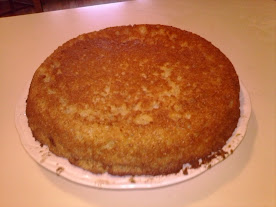
Recipe: Buttermilk Cornbread


1 stick butter*
2 cups self-rising cornmeal mix**
2 cups buttermilk
2 eggs

This looks deceptively simple, but like all good Southern cooking it absolutely depends on having the right tools and using the right technique.  I'm not even sure it can be made well just from reading a recipe -- it's probably one of those things you have to see done at least once, and try yourself several times, tweaking things until it comes out just right.

First, put the stick of butter in an 8" iron skillet, put into the oven, and turn on to 425°.

Next, using a one-cup scoop*** put two scoops of cornmeal mix into a large mixing bowl and make a well in the center.

Then, pour two cups of buttermilk into a glass four-cup measure or small mixing bowl.  Crack the two eggs into the buttermilk and beat well with a wire whisk or a fork.

Add the liquid to the dry, pouring it into the well, and stir a little, just until moistened.  There will still be lumps and that's okay -- just don't overmix it.  Let it rest while the oven finishes preheating.

When the oven's hot and the butter is just starting to turn brown, pour the batter into the middle of the skillet all at once, and put it back in the oven.  Cook until it's golden brown on top and crispy around the edges, oh, twenty or thirty minutes.

If your skillet is well seasoned, you can invert it over a plate when it's done and the cornbread will fall right out.

Cut into wedges and serve with  more butter and honey if it's for dessert, or butter and cheese (or just butter) if it's for supper.  Or crumble it up and sprinkle over chili or soup, or crumble it into a goblet, pour buttermilk over it and eat it with a spoon.  The latter was my daddy's favorite dessert.

~*~ ~*~ ~*~

Notes:
* It really has to be real butter, and yes, a whole stick of it.

** I like Aunt Jemima and White Lily the best.  I only use white cornmeal, and I think the buttermilk mix turns out better than the plain one.  Where I live right now, I can only find one-pound bags of mix, so I usually make my own.  Here's how:  1 cup of white cornmeal, 1 cup of plain, unbleached flour, 4 teaspoons baking powder, and 3/4 teaspoon of salt.  I mix up several cups of it at a time -- enough to fill a large Rubbermaid canister about 3/4 of the way to the top, so that there's some room at the top to make scooping it out easier.

*** On using a measuring scoop:  With a dry-measure cup, you fill it lightly with flour, tap the side to make the flour settle, then scrape off the top with the back side of a knife.  This gives you exactly one cup.  To use a scoop, you dig into the mix a time or two to fluff it up a little, then you dig in and bring up a fill, overflowing scoop of the mix.  Shake the scoop a little so that the excess falls off, but it should still be mounded above the top of the scoop -- just not so high that it's going to spill while transferring it to the mixing bowl.  I have no idea what the exact measure is.  I just know that once you've got the technique down, it's a lot easier than using a cup.


As it turns out, this wasn't quite full enough and I had to add a smidgen more when mixing the batter.


Saturday, August 24, 2013

This Is Just To Say

[with apologies to Mr Williams]

I have eaten
the chocolates
that were in
your drawer

and which
you were probably
saving
for Sunday treat

Forgive me
they were delicious
so sweet
and so nutty